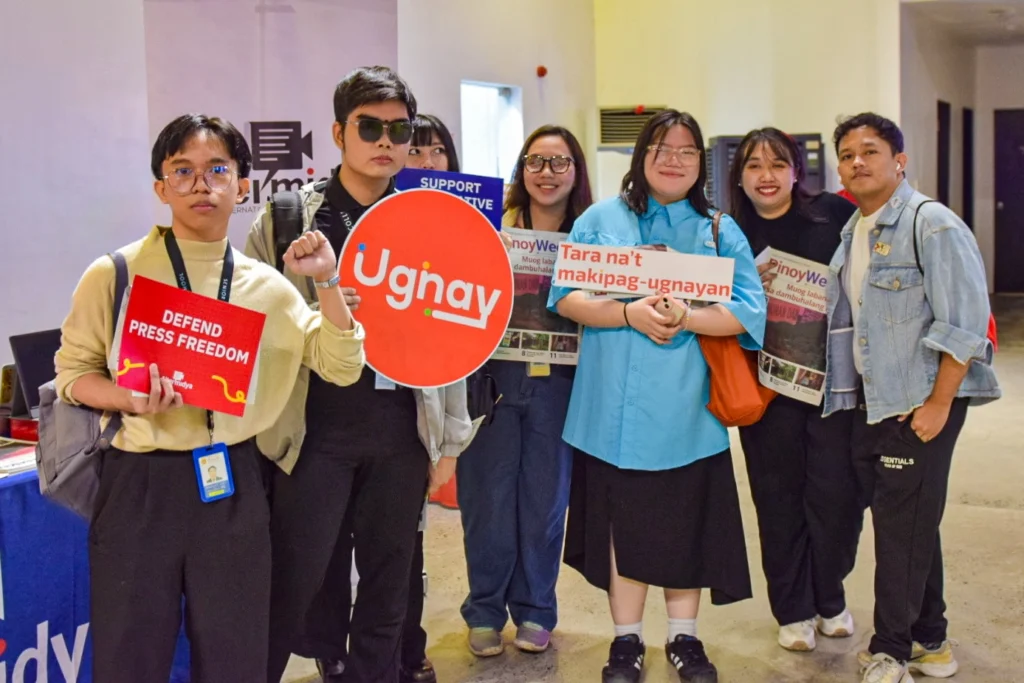
The Philippine Media and Information Literacy Summit (PH MIL Summit) returned in 2025 for its second run, gathering educators, students, content creators, and advocates from across the country. Called Ugnay, the summit was held on November 8 in celebration of UNESCO’s Global Media and Information Literacy Week, with the theme of “Minds Over AI – MIL in Digital SPaces”. It offered a full day of expert-led dialogues, interactive booths, and activities that explored the growing role of artificial intelligence in everyday life.
At its heart, Ugnay 2025 was not just a venue for discussion but a call to action. It reminded participants that media literacy is essential in a society increasingly shaped by digital platforms and emerging technologies.
Building Trust and Governance
One of the highlights was a panel discussion featuring international and local voices led by H.E. Saija Nurminen, Ambassador of Finland to the Philippines and joined by Danilo Dovgoborets, Deputy Head of Mission of the Embassy of Sweden; Mariatheres Van Veen of Safer Internet Austria; and Dr. Ebenezer Beloy, Chief Education Supervisor of the Bureau of Curriculum Development-Department of Education. Panelists emphasized that public trust is vital to protecting freedom of the press. To build this trust, there must be investment in MIL education, government transparency, and active participation from society.
Speakers also stressed the importance of integrating MIL into the national curriculum. Doing so empowers citizens to sharpen civic competencies and critically engage with the media. They noted that education should be inclusive and accessible, with empathy, compassion, and curiosity embedded in teaching. Understanding how media is produced, they explained, helps create an informed citizenry capable of resisting disinformation.
Toward a National Strategy
The discussion revealed challenges common across countries: limited resources, fragmented initiatives, and the absence of a standard MIL policy. Panelists called for a national framework and roadmap for the Philippines, supported by continuous curriculum review to keep education adaptive and evidence-based.
Teachers were identified as central to this effort. For MIL to thrive, educators must be confident and competent in teaching it, backed by training and resources. Panelists urged a whole-of-government approach to raise functional literacy and avoid silos among different initiatives. They also highlighted the role of public demand, noting that without pressure from citizens, governments may not prioritize MIL.
Opportunities (and Risks) in the Age of AI
The panel acknowledged both the opportunities and risks of artificial intelligence. AI can enhance education, improve access to information, and support innovation. At the same time, it raises urgent questions about data privacy, ethics, and the changing roles of teachers and learners. Panelists traced the history of media, from print and photography to radio, film, television, digital platforms, and now AI. Each shift, they noted, requires new literacy skills. Investing in future skills and embedding foundational elements in education were identified as crucial steps toward mainstreaming MIL.
Looking ahead, participants pointed to the country’s future AI policy as a critical step in aligning governance with grassroots needs. They emphasized that education, media, and technology sectors must work together: education to shape critical thinking, media to produce and share responsible content, and technology to ensure safe and ethical platforms.
Engaging Activities
Beyond the talks, the summit venue came alive with interactive booths from various organizations. Each booth showcased creative and hands-on experiences that reflected what MIL should be: engaging, participative, and rewarding.
Participants also joined an AI Prompt-Writing Contest, applying MIL principles to craft thoughtful prompts and evaluate AI-generated responses. Another highlight was the announcement of winners for Ugn[ai]y, a nationwide content creation competition on the everyday use of AI in the Philippines. Winners were announced to be Aldrin Jeynard Gonzales (first prize), Nelmark Santiago (second prize), and John Christopher Narag (third prize).
Moving Forward
Ugnay 2025 showed that strengthening MIL in the age of AI requires more than awareness. It demands collaboration, investment, and policy action. The summit’s key takeaway was clear: investing in education is the first step toward mainstreaming MIL. This means drafting national policies, institutionalizing MIL in the curriculum, and creating an enabling environment for teachers, students, and civil society.
As the Philippines moves forward, the challenge is to continue building a media-literate society that can think critically, act responsibly, and use technology for the common good. With empathy, curiosity, and collaboration at the center, Filipinos can shape a future where AI and media literacy truly serve the people.